COD Mobile Battle Royale Squad Tactics
Play Smarter and Rank Up
In Call of Duty: Mobile (COD Mobile) Battle Royale, a squad can have skilled players and still lose because they move separately, fight without a plan, or rotate too late. Winning more often takes more than good aim. It takes teammates who share information, choose fights carefully, and stay close enough to help each other.
This guide explains simple squad tactics for players who want to improve their rank and consistency. You’ll learn how to assign roles, communicate during fights, move across the map, and make better choices in the final circles.
What makes a Battle Royale squad work?
A good squad does not need one perfect leader or four expert players. It needs everyone to understand the plan and share useful information.
Before a fight or rotation, the squad should know:
- Where it is going
- Which enemy or area matters most
- Who is watching each direction
- When to fight, hold, or move
- How the squad will regroup if separated
A useful callout is short and specific: “Two enemies on the roof, north side, moving toward the road.” A vague callout like “They’re over there” makes teammates search instead of act.
Give everyone a flexible role
Roles help the squad avoid doing the same job—or forgetting an important one. They should guide players, not lock them into one task all match.
| Role | Main job | Example callout |
|---|---|---|
| IGL (in-game leader) | Chooses the squad’s plan and helps everyone commit | “We’ll take the hill, then move east.” |
| Scout | Watches nearby areas and spots threats | “One squad near the houses, southwest.” |
| Entry player | Takes the first angle when the team is ready to fight | “I’m holding this doorway.” |
| Support | Covers teammates, carries useful supplies, and helps with revives | “I’m covering while you heal.” |
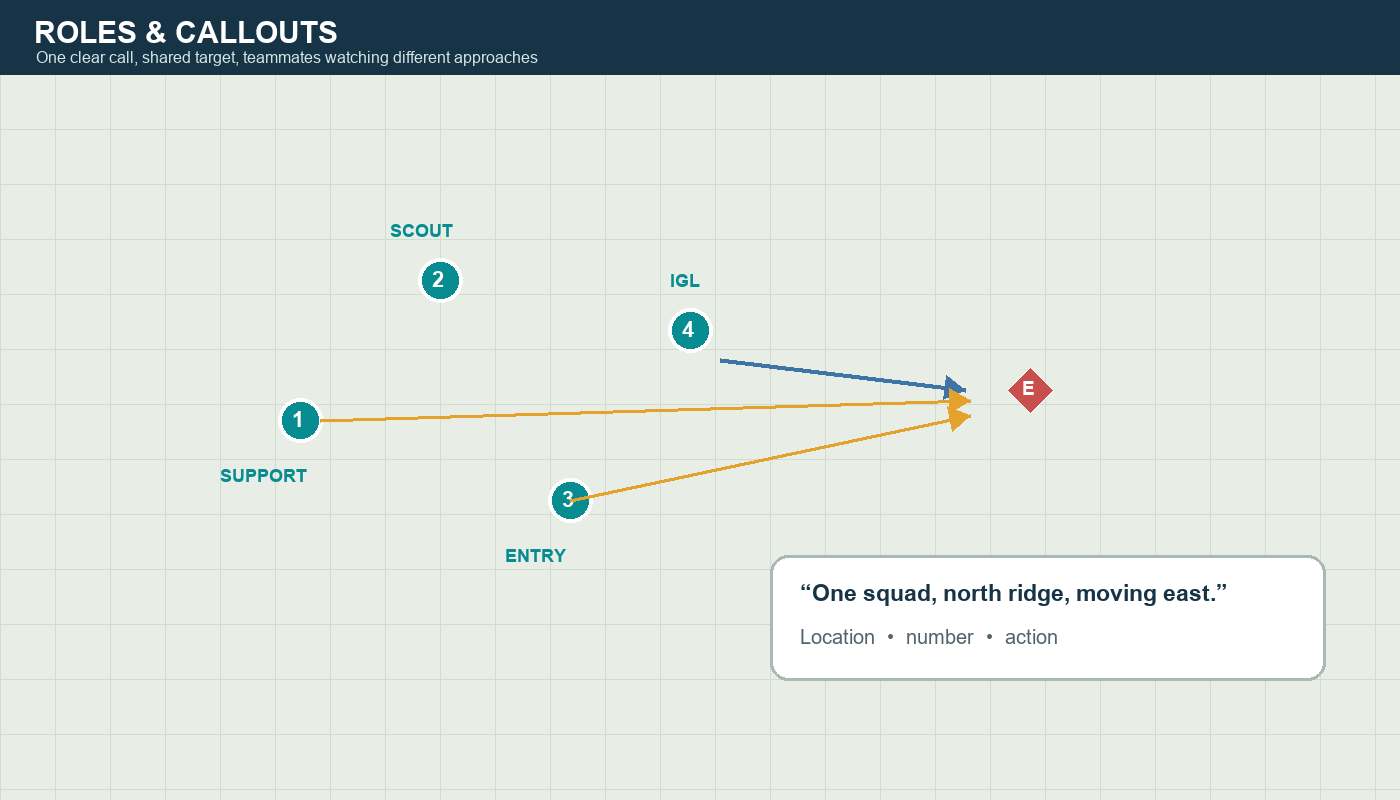
One person should make the main calls, but everyone should share what they see. If new information makes the plan unsafe, speak up clearly. The squad can change the plan together.
Make callouts easy to understand
During a fight, teammates need information they can use quickly. Try to include:
- Where the enemy is
- How many you saw
- What they are doing
- What you are doing next
For example: “One enemy behind the rock, northeast, healing. I’m holding the left side.”
Avoid shouting guesses, repeating the same warning, or blaming teammates while the fight is happening. Save the review for after the match.
Choose a landing plan before the match
A squad’s landing spot affects its equipment, early fights, and first rotation. The best spot is not always the busiest place on the map. A hot landing can be useful for practice, but it can also end a ranked match before the team gets organized.
Before jumping, decide:
- Is the squad looking for an early fight or a safer start?
- Are all players landing close enough to help each other?
- Where will the squad regroup after collecting equipment?
- What is the backup plan if another team lands nearby?
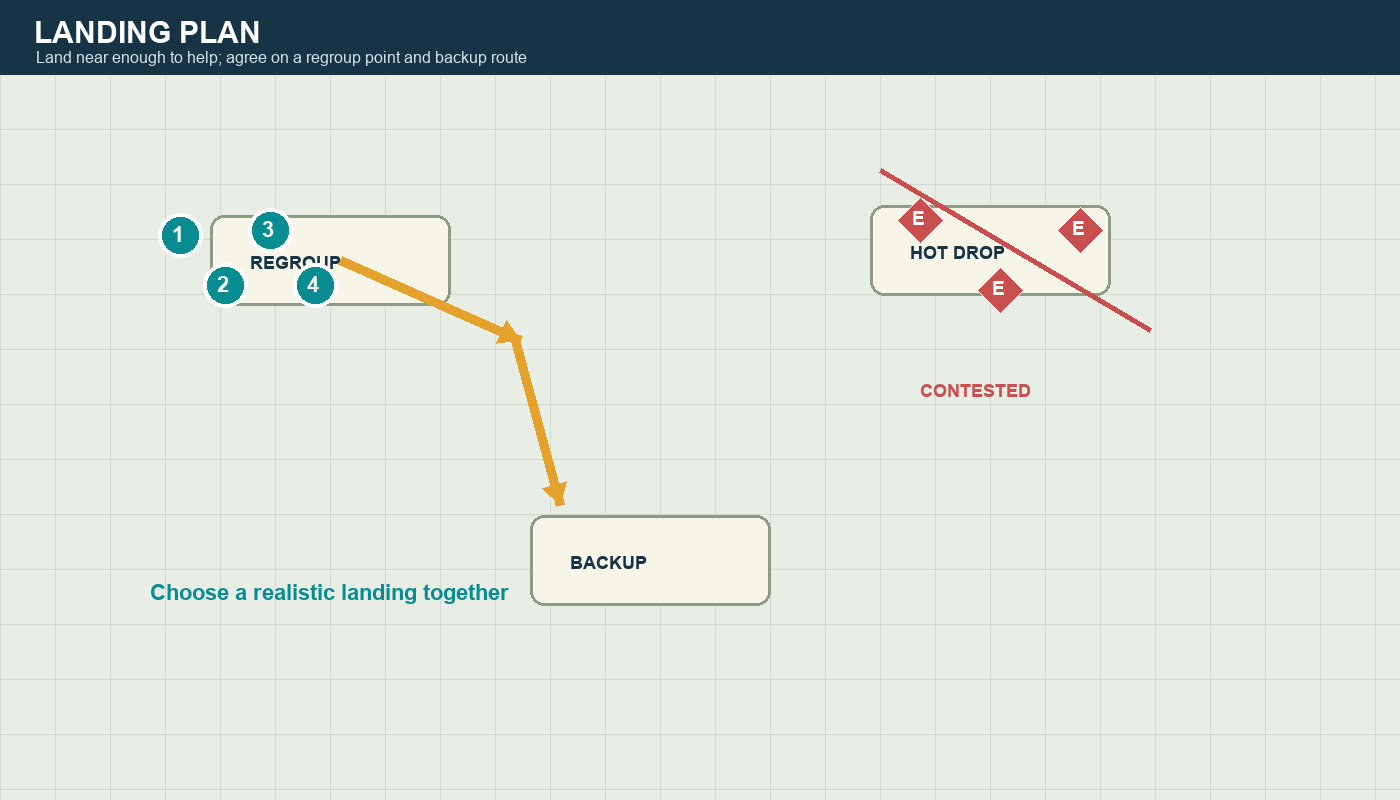
Try not to have every player land in a different area. Looting separately may feel faster, but it leaves teammates unable to help if someone gets attacked.
Once the squad has enough equipment, regroup and check the map. Don’t spend too long searching every building while the safe area is shrinking.
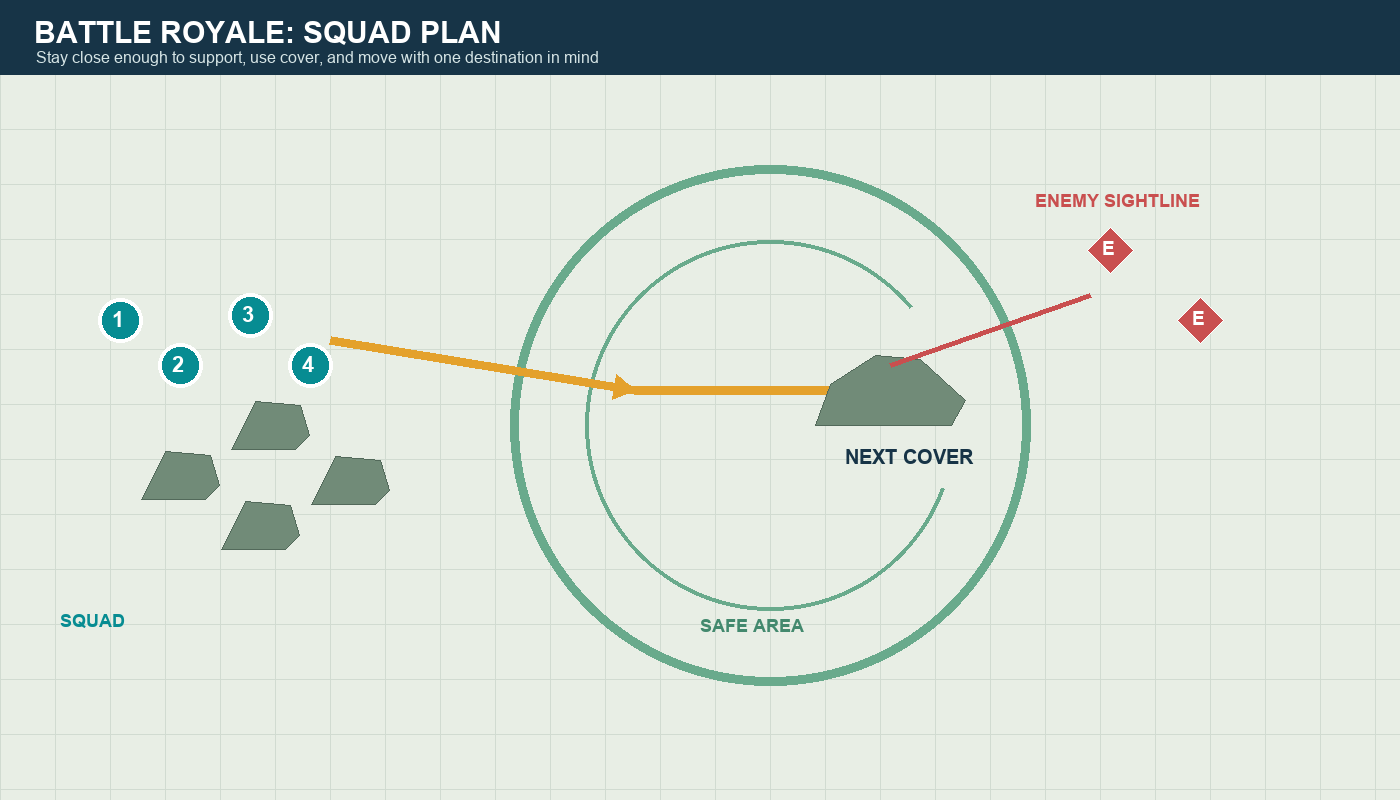
Rotate early and move as a squad
A rotation is the route your team takes toward a safer or more useful position. Good rotations help squads avoid being caught in the open by the zone or arriving late to a crowded area.
Before moving, check:
- Where the next safe area is
- Which routes have cover
- Whether enemies could be watching the route
- Whether your squad needs a vehicle or can travel safely on foot
Move with a destination in mind. Don’t run toward a marker if you haven’t checked whether it leaves the team exposed or trapped.
If you use a vehicle, choose where to stop before you arrive. Driving straight into a crowded area can reveal your position and leave the squad with no safe exit. After stopping, regroup behind cover and check the next move.
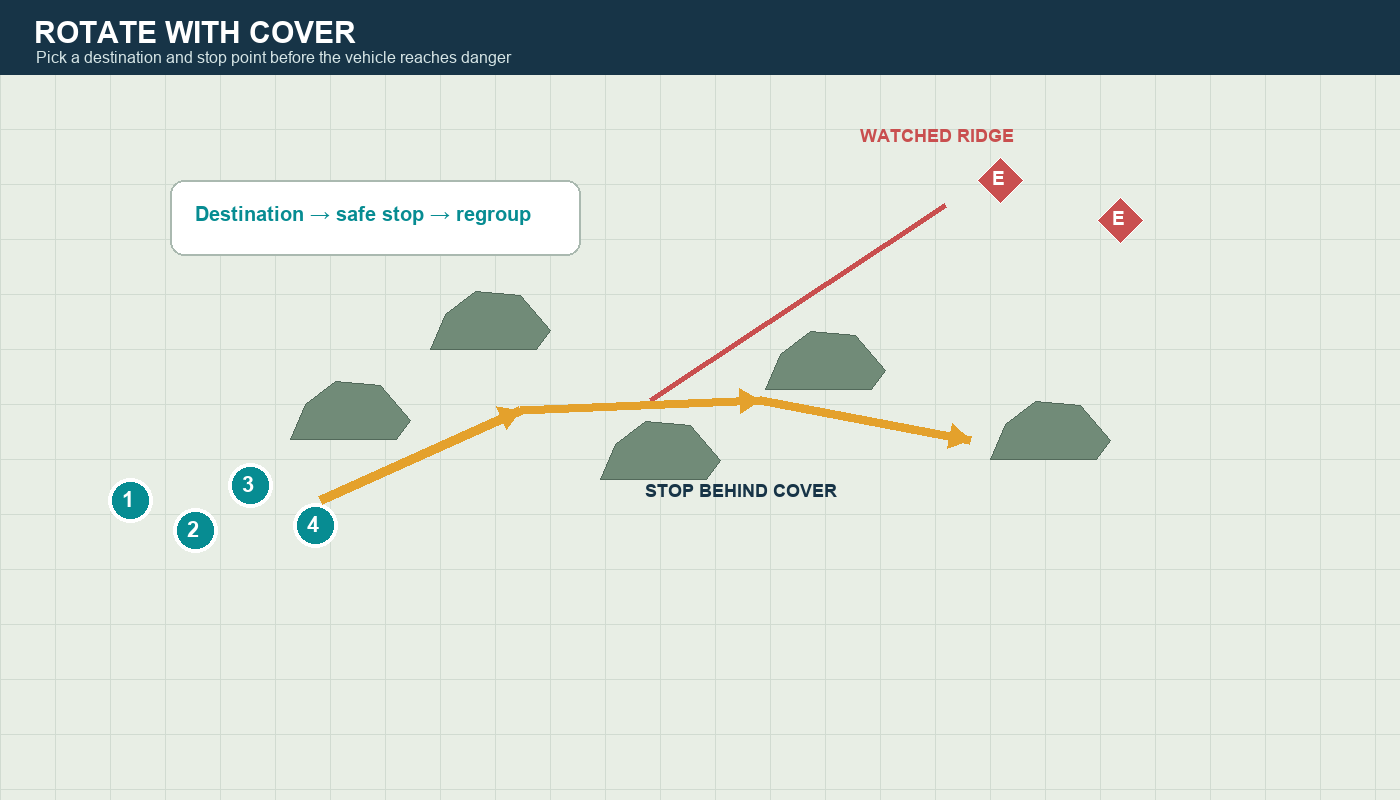
If the squad gets caught outside the safe area, keep moving toward cover together. Don’t stop in the open to fight unless you have a strong reason and a safe position.
Take fights you can finish
Seeing an enemy does not mean the squad has to shoot. A fight can draw other teams, cost supplies, or leave you stuck outside the safe area.
Before engaging, ask:
- Are teammates close enough to support each other?
- Does the squad have cover?
- Can you identify the enemies and their positions?
- Is there a safe route if the fight turns bad?
- Will this fight improve the squad’s position?
If the answers are mostly no, wait, move, or choose another route. Avoiding a bad fight is a skill. It can help the squad stay alive long enough to earn a better position and more rank points.
When you do fight, focus on the same target. If each player attacks a different enemy, opponents can heal or move while your squad spreads out. A focused attack gives the team a better chance to create an advantage.
Don’t rush just because an enemy is down
A downed enemy might be protected by their teammates. Rushing forward without checking can turn one advantage into a squad wipe.
Before pushing, ask:
- Can the squad see the enemy’s teammates?
- Is there cover along the route?
- Are all players ready to move?
- Could another squad be nearby?
If the push looks unsafe, hold your position and watch for movement. You can keep pressure on the enemy without charging into an ambush.
Use cover and watch different angles
Squads should stay close enough to help each other, but they do not need to stand in one tight group. If everyone uses the same small cover, one enemy angle can threaten the whole team.
Spread to nearby cover where teammates can still provide support. One player can watch the front, another can check a side route, and a third can stay ready to help the squad move.
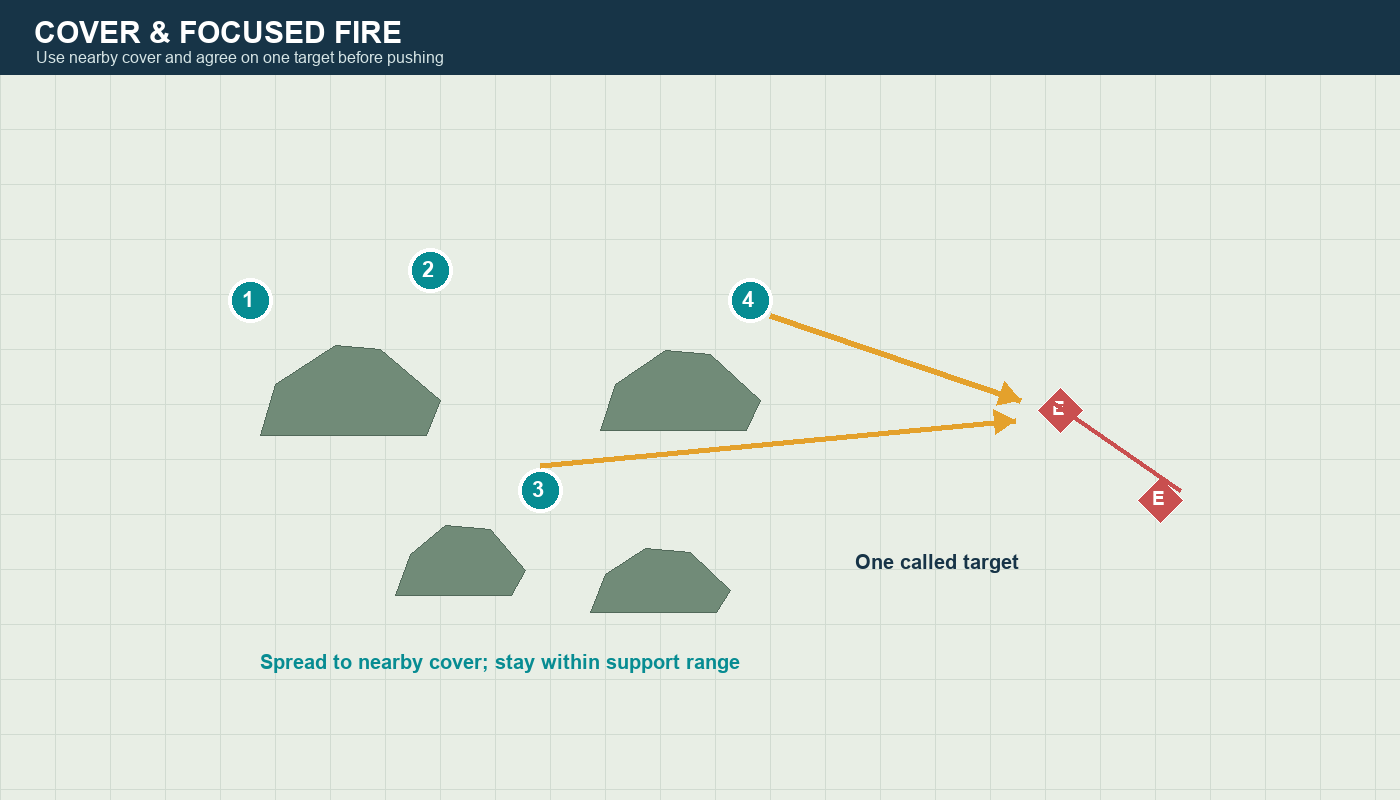
The key is to avoid becoming so spread out that teammates cannot reach each other. If someone takes a new angle, they should call it out and keep the team informed.
Use available cover to heal, reload, and reposition. If the squad has to cross an exposed area, agree on where everyone is heading and move together. Don’t let one player sprint ahead while the rest are still deciding.
Help knocked teammates with a plan
A knocked teammate needs help, but rushing into danger can create more knocked players. First check whether the revive spot is covered and whether enemies can see the approach.
- If the spot is safe: one player can revive while teammates watch nearby routes.
- If enemies are watching: use cover, equipment, or a different route before reviving.
- If the squad is outnumbered: move to a safer position together if possible.
Tell teammates what you’re doing: “I’m reviving behind the wall; watch the hill.” A clear call lets the rest of the squad cover the revive instead of guessing.
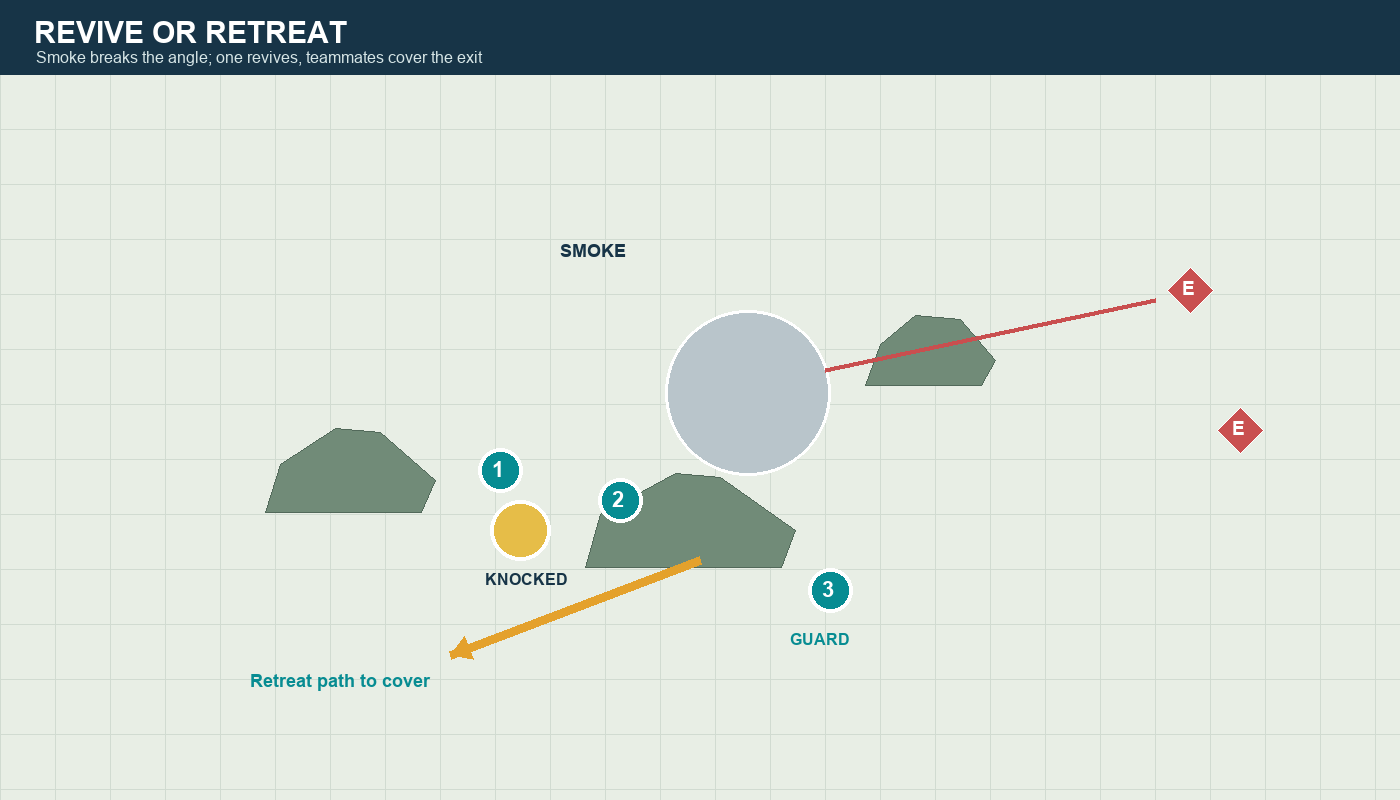
If the team must retreat, make the call early and move together. Don’t leave a teammate behind without warning. A planned regroup gives the squad a chance to heal and prepare for another fight.
Use class abilities to support the whole team
COD Mobile Battle Royale classes give squads different tools. Whatever classes your team chooses, use them to solve a problem the squad actually has.
Before the match, talk briefly about how the team’s classes can help with:
- Finding or tracking nearby enemies
- Moving through dangerous areas
- Defending a position
- Escaping a difficult fight
- Supporting teammates who need help
Don’t activate an ability just because it is ready. Think about what the team needs at that moment and tell your teammates what you’re using. Coordinated abilities are more useful when the squad knows how to respond.
Stay focused in the final circles
As the safe area gets smaller, every movement matters more. Squads have less room to avoid each other, and a fight may attract additional enemies.
In the final circles:
- Keep teammates close enough to help.
- Watch more than one approach.
- Move before the zone forces the squad into the open.
- Use cover and terrain when changing positions.
- Avoid firing if it reveals the squad without giving an advantage.
- Agree on the next move before everyone starts running.
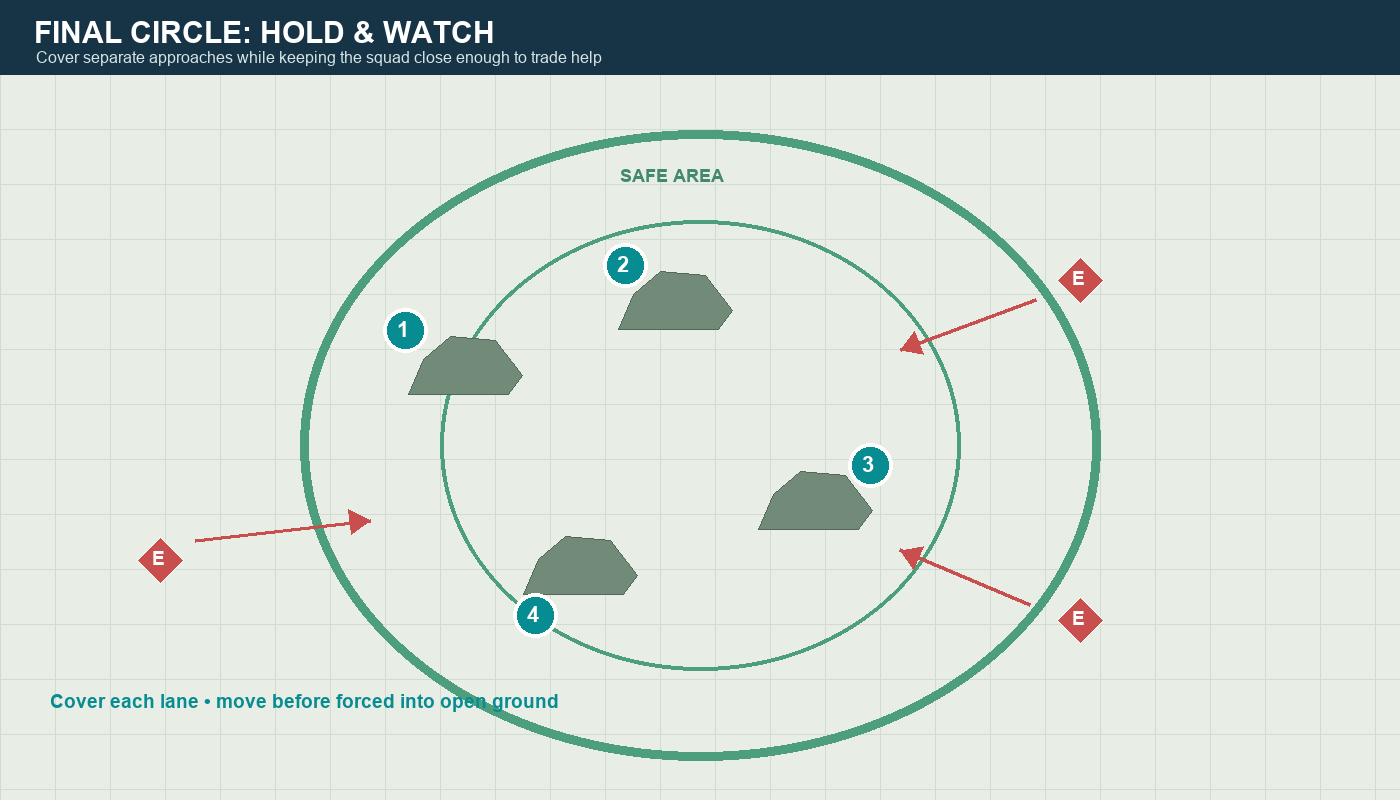
Try to reach a position where the squad can see threats and move again if needed. Don’t chase every enemy into an area your team hasn’t checked.
A five-minute squad practice drill
Use this drill in a match or practice session:
- Pick one player to make the main calls.
- Have every player give one short, specific enemy callout.
- Move together from one piece of cover to another.
- Choose a target and practice focusing fire as a team.
- Practice retreating and regrouping without splitting up.
After the match, discuss one moment when the squad worked well and one moment when it lost coordination. Keep the review specific. “We started the push while two players were healing” gives the team something to fix. “We’re bad at this” does not.
Final takeaway
To improve your COD Mobile Battle Royale consistency, land with a plan, regroup early, rotate with cover, and take fights your squad can support. Keep callouts clear, help knocked teammates carefully, and avoid chasing enemies without checking the risk.
Choose one habit from this guide and practice it in your next match. Once it becomes natural, add another.